Best Aseptic Tomato Paste in Iran: Production & Buying 2026

Address:

Al Mashriq Building, Al Khuwair Muscat

Phone Call:

(+968)79572032

Email:

info@Rowyal.com

Best Aseptic Tomato Paste in Iran: Production & Buying 2026

Best Aseptic Tomato Paste in Iran: Production & Buying 2026

Best Aseptic Tomato Paste in Iran: Production & Buying

Navigating the Iranian market for premium aseptic tomato paste? This comprehensive guide is tailored for discerning buyers, ambitious exporters, and passionate culinary professionals seeking unparalleled quality and market insights. Unveiling the process from farm to export: We delve into the heart of Iran’s production hubs, focusing on cutting-edge aseptic processing techniques employed in Fars province, particularly Marvdasht city. 

Table of Contents

For direct inquiries and pricing on Rowyal Factory’s premium aseptic tomato paste, connect with us on WhatsApp at +98-9171199398.

What is Aseptic Tomato Paste?

Aseptic Tomato Paste is a form of concentrated tomato product that is processed and packaged using a specialized technology to ensure sterility without the need for preservatives. The term “aseptic” refers to the process where the tomato paste is flash-heated to kill bacteria and then cooled and filled into pre-sterilized bags within a completely sterile environment.

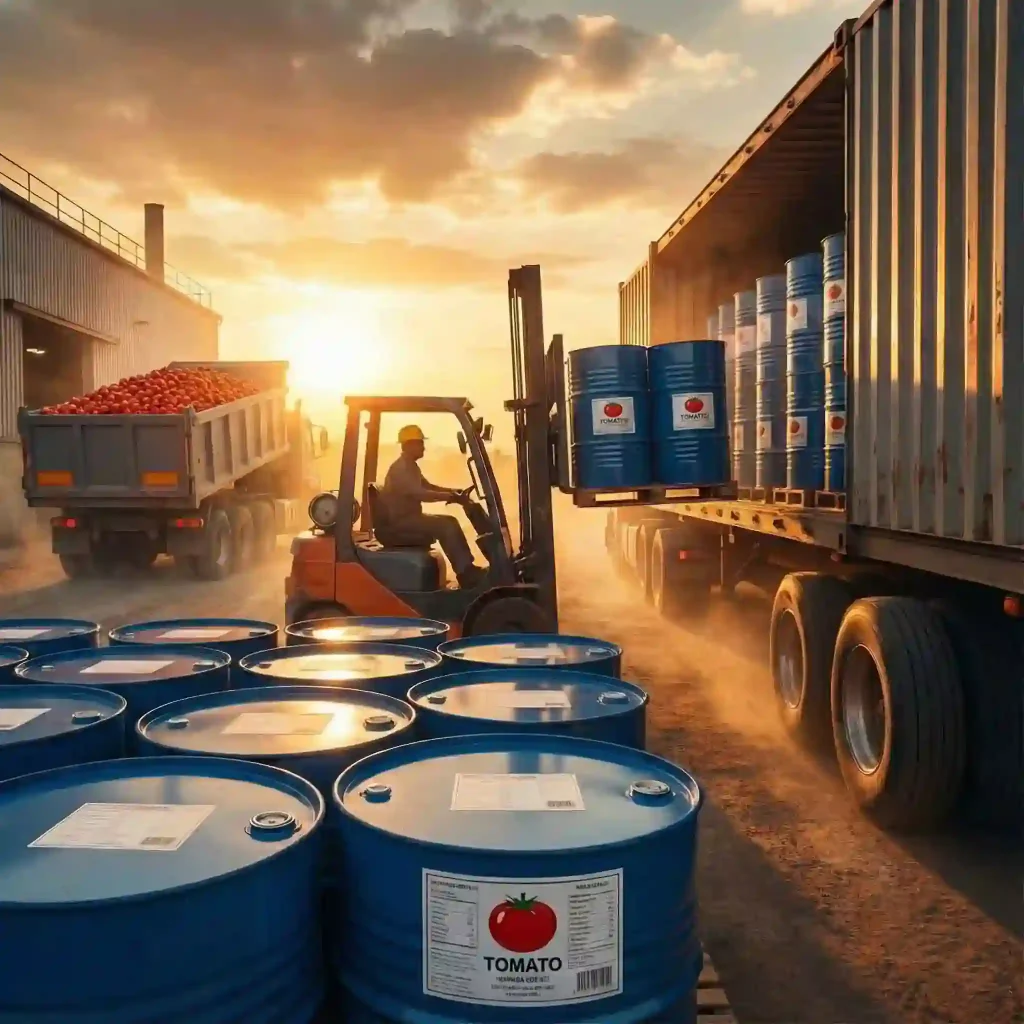
Unlike canned tomato paste found in grocery stores, aseptic paste is typically produced for industrial purposes. It is packed in large, multi-layered antiseptic bags (usually placed inside 220-liter steel drums). 

The primary advantage of this method is that the paste can be stored at room temperature (ambient temperature) for up to two years while maintaining its natural color, flavor, and nutrient profile, making it the global standard for raw material in the food industry (e.g., for making ketchup, sauces, and juices).

Key Takeaways:

  • No Preservatives: The sterilization process eliminates the need for chemical additives.
  • Ambient Storage: It does not require refrigeration during transport or storage.
  • High Concentration: It is usually thicker than standard canned paste.

Watch the video below to test the quality of our aseptic tomato paste factory.

Technical Processing and Specifications of Aseptic Tomato Paste in Iran

For food technologists and supply chain experts, Aseptic Tomato Paste represents a sophisticated balance between thermal processing and product integrity. The production utilizes a High-Temperature Short-Time (HTST) sterilization method. The concentrate is rapidly heated (often between 105°C to 115°C) and immediately flash-cooled to minimize thermal stress, thereby preserving the lycopene content and volatile aroma compounds.

The product is categorized primarily by its Brix level (soluble solids content) and its Viscosity (Break type):

1. Brix Level: The industry standard for aseptic paste is 36-38% Brix. This high concentration reduces logistics costs by removing maximum water content while keeping the paste pumpable for downstream processing.

Brix Level

The industry standard for Aseptic Tomato Paste in Iran is 36-38% Brix. This high concentration reduces logistics costs by removing maximum water content while keeping the paste pumpable for downstream processing.

Thermal Break Types (Enzymatic Inactivation)

  • Cold Break (CB): Processed at lower temperatures (approx. 65-75°C). This retains the natural enzymes, resulting in a lower viscosity. It is ideal for juices and reconstituted beverages where fluidity is required.
  • Hot Break (HB): Processed at high temperatures (approx. 90-100°C) to deactivate pectinase enzymes immediately. This prevents the breakdown of pectin, resulting in a very high viscosity. It is the raw material of choice for ketchup, pizza sauce, and heavy pastes.
معتبرترین کارخانه رب اسپتیک رنگ 2.2 و قوطی برای صادرات Aseptic Tomato Paste in Iran

Quality Parameters of Aseptic Tomato Paste in Iran

A professional specification sheet for Aseptic Tomato Paste in Iran typically includes:

  • Bostwick Consistency: Measures flow rate is 6.8.
  • pH Level: Typically maintained between 4.0 and 4.1 to ensure shelf stability.
  • Howard Mold Count (HMC): Strictly controlled (usually <50%) to indicate raw material hygiene.
  • Color (Hunter/Gardner): High a/b ratios indicate a vibrant red color derived from ripe tomatoes, usually from 2.1 to 2.2.
  • Packaging Technology: The paste is filled into aseptic bags constructed of metalized polyester and polyethylene barriers (often 4-ply) to prevent oxygen permeation and light exposure, ensuring the product remains commercially sterile until the seal is broken.

Aseptic Tomato Paste in Iran Laboratory Analysis Table

ParameterSpecification / Result
Product NameAseptic Tomato Paste
Production Date12/01/2026
Expiry Date11/01/2028
Batch Number (BN)40483
Net Weight240 kg
Brix36–38 (Cold Break)
Process TypeCold Break
Viscosity (a/Brix 12.5 – 30 sec)6.8
pH4.1 ± 0.1
Acidity (as Citric Acid)1.7 ± 0.05 g/100 g
External MaterialNegative
Color (a/b ratio)2.1 to 2.2
Salt< 1 g/100 g
L Value (Lightness)25.04
LCPN (Color Index)456.85
Howard Mold Count32
Aerobic Mesophilic BacteriaNegative
Anaerobic Mesophilic BacteriaNegative
Aerobic Thermophilic BacteriaNegative
Anaerobic Thermophilic BacteriaNegative
Lactic Acid Bacteria / Yeast / MoldNegative
YeastNegative
MoldNegative
Lead (Pb)Max 0.04 ppm
Tin (Sn)Max 150 ppm
PackagingAseptic Bag
Shelf Life2 years (in original packaging)

Production of Aseptic Tomato Paste in Iran

🌱Main Production Hubs

The main production hubs for aseptic tomato paste in Iran are Shiraz and Marvdasht. These areas benefit from fertile agricultural land, stable climate conditions, and access to modern processing facilities. Tomatoes harvested here are fully ripened and processed quickly, ensuring strong color concentration, natural flavor, and suitability for both domestic use and export markets.

⚙️Modern Production Methods

Production relies on automated aseptic systems, including high-temperature sterilization units and sealed filling machines. These technologies prevent microbial contamination and allow tomato paste to remain shelf-stable without preservatives, while fully complying with international food safety standards.

📊Production Volume & Facts

Iran produces millions of tons of aseptic tomato paste every year. A significant share is consumed locally, while export-grade volumes are shipped to markets such as Iraq, Oman, and GCC countries. Shiraz and Marvdasht facilities are known for consistent quality and export readiness.

Packaging and Sizes Available of Rowyal Factory Products

Packaging TypeCommon SizesBest Use CaseKey Advantages
Sachet Packaging50g – 70gRetail sales, catering services, airlines, hotelsLow unit cost, single-use convenience, easy distribution for food service channels
Metal Cans400g to 4kgHousehold use, supermarkets, wholesalersWide size range, long shelf life, easy stacking, strong consumer acceptance
Glass Jars500g to 1.6kgPremium retail, home cooking, export shelvesBetter flavor protection, premium appearance, chemical-free storage, reusable packaging
Aseptic Drum220kgIndustrial processing, bulk exportMaximum shelf stability, export-friendly, cost-efficient logistics for large volumes

Export Potential and Regulations

The export potential of Aseptic Tomato Paste in Iran has grown significantly over the past decade, driven by high production capacity, competitive pricing, and compliance with international food safety standards. Iran is now recognized as a key supplier of aseptic tomato paste in the Middle East, especially for neighboring countries and Gulf markets that rely heavily on imported processed food products.

Top Importing Countries

  • Iraq is the largest importer due to geographical proximity, strong demand for tomato-based products, and competitive transport costs. According to trade data published by the Islamic Republic of Iran Customs Administration (IRICA), Iraq consistently ranks among the top buyers of Iranian food products.
  • Oman acts both as a consumer market and a re-export hub. Omani importers prefer aseptic tomato paste because of its long shelf life and suitability for further packaging.
  • Gulf countries demand high-quality, preservative-free products that meet strict labeling and safety standards. Aseptic tomato paste aligns well with these requirements, especially for use in food manufacturing and HoReCa sectors.
  • These markets favor Iranian products due to stable quality, halal compliance, and competitive pricing compared to European suppliers.

Customs Regulations and Export Licenses

Exporting aseptic tomato paste from Iran requires compliance with several mandatory regulations and certifications. According to official guidelines published by the Iran Trade Promotion Organization (TPO) and Iran Food and Drug Administration (IFDA), exporters must obtain:

  • Health Certificate issued by IFDA
  • Certificate of Origin from the Iran Chamber of Commerce
  • Export Permit registered through the EPL system of IRICA
  • Compliance with labeling standards, including production date, expiry date, net weight, and country of origin

For GCC markets, additional requirements may apply, such as GSO standards compliance and Arabic labeling. Failure to meet these requirements is one of the most common reasons for shipment delays or rejection at destination ports.

Conclusion

Aseptic tomato paste in Iran stands out as a reliable, high-quality solution for both domestic use and international trade. With modern aseptic processing, the product offers long shelf life, preservative-free safety, and consistent color and flavor.

Iran’s strong production hubs, export-ready packaging, and compliance with global food standards make it a competitive supplier in regional markets. Growing demand from Oman, Iraq, and GCC countries highlights its export potential. Overall, choosing Iranian aseptic tomato paste means quality, stability, and confidence for buyers and exporters alike.


Mahsa Abbasi – Tomato Paste Trade Expert

Mahsa Abbasi

Mahsa Abbasi is a Foreign Trade Expert with over 9 years of hands-on experience in food exports, with a strong focus on tomato paste trade. She has worked closely with production teams, exporters, and overseas buyers, managing logistics and customs processes for regional markets such as the UAE and GCC countries. Learn more on her author page.

Frequently Asked Questions (FAQ)

1. What does “aseptic” really mean in tomato paste?

Aseptic tomato paste means both the product and the packaging are sterilized separately and filled under sterile conditions. This prevents any microbial contamination without using preservatives. As a result, the paste remains shelf-stable at room temperature for up to two years, which is essential for export and industrial use.

2. How long can aseptic tomato paste be stored without refrigeration?

When stored in its original aseptic packaging, it can be safely stored for up to 24 months at ambient temperature. This is confirmed by laboratory tests and accepted by international food safety standards such as Codex Alimentarius.

3. What is the difference between cold break and hot break tomato paste?

Cold break paste is processed at lower temperatures, preserving natural color and fresh tomato flavor. It is preferred for sauces and ketchup. Hot break paste is thicker but has less fresh flavor. Most export-grade aseptic tomato paste in Iran uses the cold break process.

4. What Brix level is considered export-grade?

For export and industrial buyers, 36–38 Brix is considered premium. Higher Brix means more concentration, lower transport cost per unit, and better efficiency for food manufacturers.

5. Is Iranian aseptic tomato paste accepted in GCC and Iraq markets?

Yes. Iranian aseptic tomato paste is widely accepted in Iraq, Oman, UAE, and other GCC countries, provided it meets labeling, health certification, and quality requirements set by local authorities.

6. Why do some shipments get rejected at destination ports?

Common reasons include incorrect labeling, mismatch between specs and actual product (Brix, pH), damaged packaging, or incomplete documents. Most rejections are documentation-related, not quality-related.

7. What laboratory tests are most important for buyers?

Professional buyers usually check: Brix, pH and acidity, Color index (a/b, L, LCPN), Microbiology (yeast, mold, bacteria), Heavy metals (Pb, Sn). These tests ensure safety, stability, and regulatory compliance.

8. Does aseptic tomato paste contain preservatives?

No. Properly produced aseptic tomato paste contains zero chemical preservatives. Shelf stability is achieved through sterilization and aseptic filling, not additives.

9. What packaging is best for export?

For bulk export, 220kg aseptic drums or bags are standard. They reduce oxidation risk and are preferred for long-distance shipping and industrial processing.

10. Can aseptic tomato paste be repackaged in the destination country?

Yes. Many importers reprocess or repack aseptic tomato paste into cans or jars locally. This is common in Oman and UAE and requires stable quality and microbiological safety.

11. What documents are required for export from Iran?

Typically required documents include: Health Certificate (IFDA), Certificate of Origin, Commercial Invoice & Packing List, Export Permit (EPL system). Additional requirements may apply for GCC countries.

12. How can buyers verify product quality before shipment?

Buyers often request: Lab analysis sheet, Pre-shipment inspection, Retained samples. This reduces disputes and ensures the delivered product matches specifications.

13. Is aseptic tomato paste suitable for industrial food production?

Yes. It is widely used in ketchup, sauces, ready meals, and canned foods due to its consistency, safety, and long shelf life. Industrial buyers prefer it for predictable performance and cost control.
5/5 - (1 vote)